


Hi friend,
If you or someone you love takes Ozempic or Wegovy, this one’s for you.
I recently interviewed Ellen Relkin, a partner at Weitz & Luxenberg with about 40 years of experience in mass torts. She’s co-lead counsel in the New Jersey lawsuits over a rare kind of vision loss linked to semaglutide, the drug in Ozempic and Wegovy.
What’s the condition?
It’s called NAION, short for non-arteritic anterior ischemic optic neuropathy. In plain English: blood flow to the optic nerve drops, and it can cause sudden vision loss, usually in one eye. It’s often permanent.
What the research shows
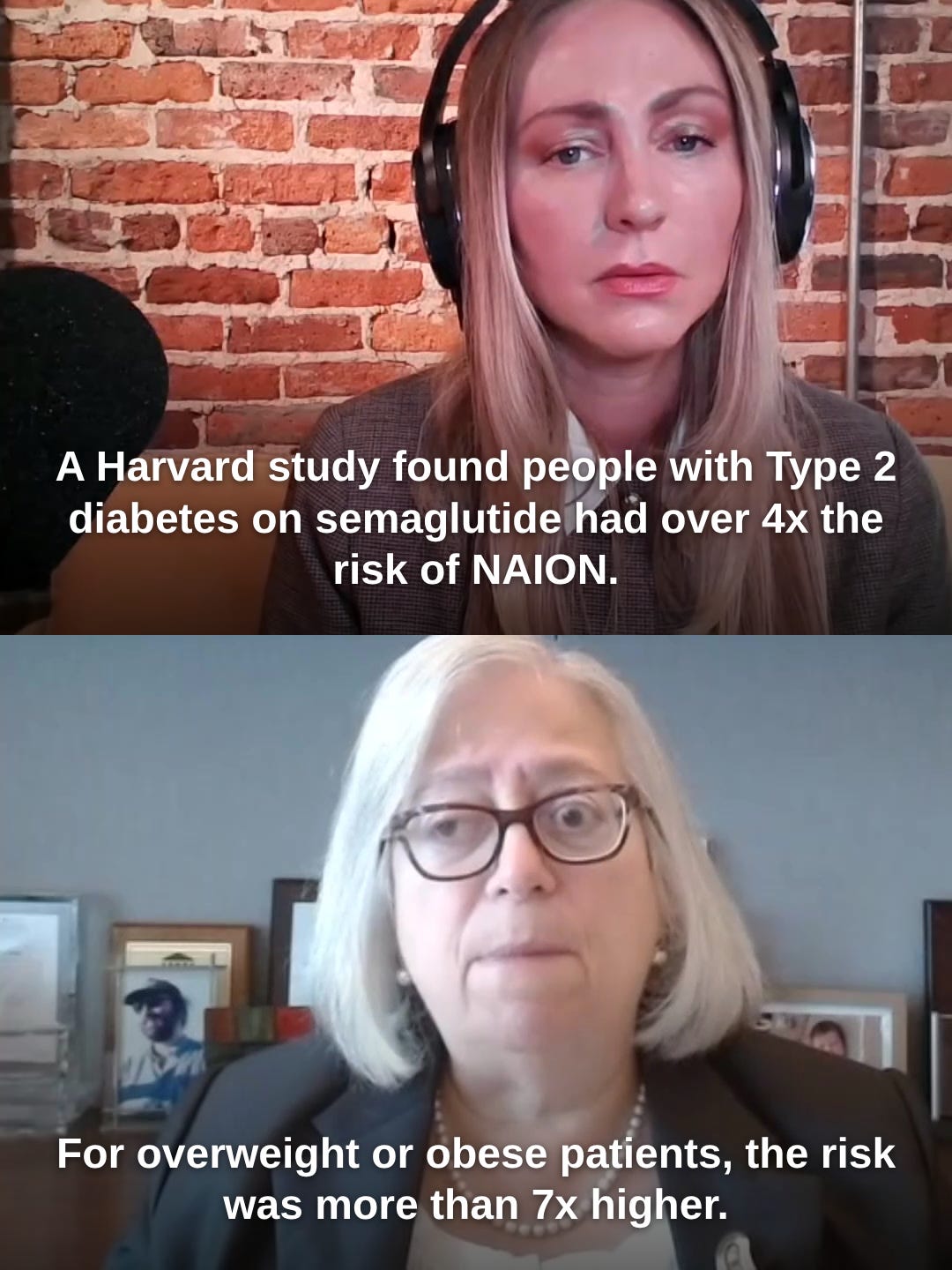
A 2024 Harvard study in JAMA Ophthalmology found people with Type 2 diabetes on semaglutide had more than four times the risk of NAION compared with people on other diabetes drugs. For people prescribed it for weight, the risk was more than seven times higher.
A Danish study of more than 424,000 people with Type 2 diabetes found semaglutide more than doubled the risk.
A 2025 analysis that pooled multiple studies also found a significant link.
To keep this in perspective: it’s still rare. Researchers estimate about one or two extra cases per 10,000 people with Type 2 diabetes each year.
What the lawsuits say
The lawsuits claim Novo Nordisk, the maker of Ozempic and Wegovy, knew or should have known about the risk and didn’t warn patients in the U.S.
Here’s the part that stopped me: in June 2025, Europe’s drug regulator recommended adding NAION to the label as a very rare side effect. The U.K. and Australia warn about it too. The U.S. label still doesn’t.
Where the cases stand
In December 2025, the federal cases were combined into one court in Pennsylvania (MDL 3163, in front of Judge Karen Marston).
Nearly 250 cases are active there as of October 2026, with hundreds more in New Jersey state court.
No trials have happened and no settlements have been announced. Next comes discovery, when the company has to hand over its internal documents.
What I’d do if I were on a GLP-1
Ask your doctor about NAION, especially if you have diabetes, high blood pressure, sleep apnea or an existing eye condition.
Get a baseline eye exam. The American Optometric Association recommends one before starting a GLP-1, plus a follow-up after.
If your vision suddenly changes, like blurring or losing part of your sight in one eye, call your doctor right away and tell them you take a GLP-1.
Don’t stop your medication on your own. Talk to your doctor first.
Watch the full conversation
Ellen and I discussed what the company knew, why the U.S. label is different, and what this means for compounded GLP-1s.
Prefer to read? Read the full interview here.
If you’ve experienced sudden vision loss while taking Ozempic or Wegovy and want to learn about your options, you can request a free case review through Drugwatch here: drugwatch.com/lowtoxlawyer.
Disclaimer: I’m an attorney, but I’m not your attorney, and nothing here is legal or medical advice. This newsletter is for education only. I work as an in-house legal expert at Drugwatch. If you submit your information through a Drugwatch link, it may be shared with attorneys in the Drugwatch network. Read Drugwatch’s full disclaimer.